
When Prayer Becomes More Than an Obligation
Prayer is often seen as a daily obligation, something we are expected to do at certain times of the day.
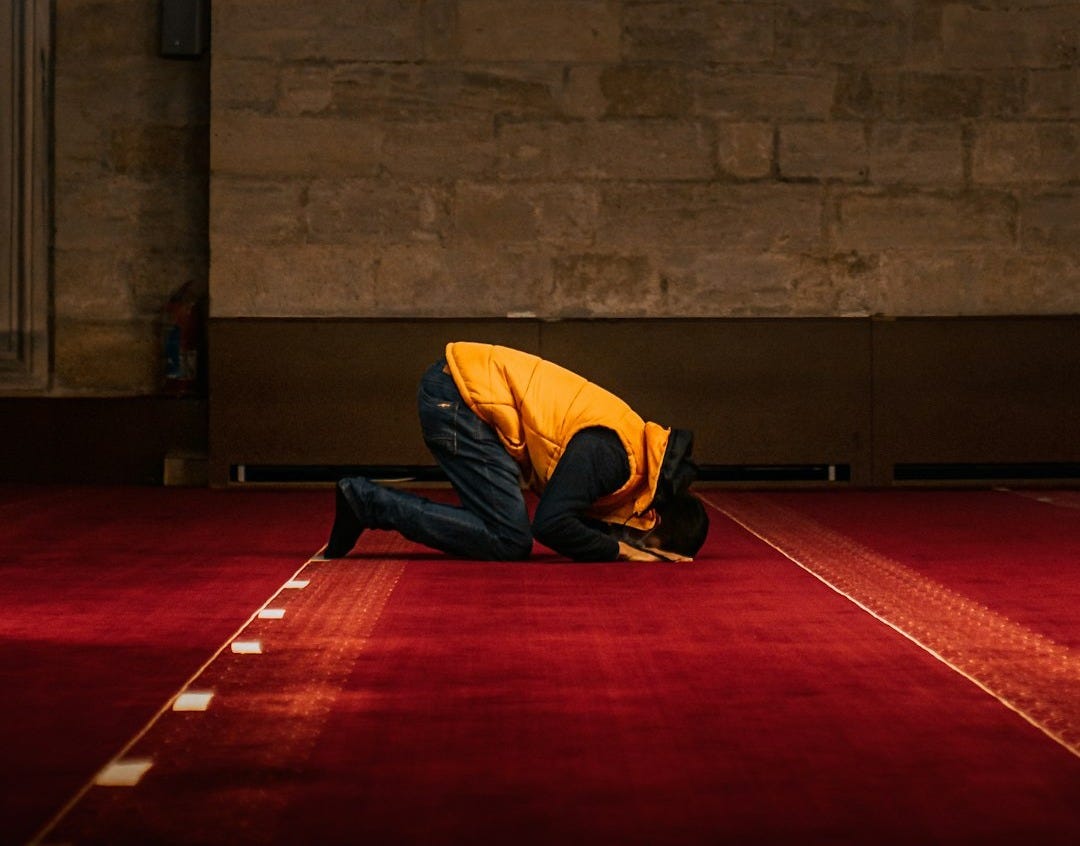
Prayer was never meant to be only a routine. In many ways, prayer is where god slowly reshapes a person’s life. it is where the heart learn to become calmer, where the mind finds space to breathe and where we are reminded that not everything in life has to be carried alone.
Sometimes, the call to prayer is heard, but the body feels unusually heavy. We know it it time to pray, yet we delay. We tell ourselves “Just a few more minutes.”
At first, it may seem like ordinary tiredness. But perhaps there are moments when that heaviness is telling us something deeper: that the heart has started to drift.
The prophet warned about prayer becoming burdensome, especially when a person begins to approach it without sincerity. It is a reminder that our relationship with prayer deserves to be examined from time to time.
There is a story about a man who prayed for sixty years, yet not a single prayer was accepted from him. He continued praying, but his prayers were performed without proper awareness and sincerity. The lesson is not simply about how long or how often someone prays, but whether the heart is truly present within it.
It is possible for the body to be in prayer while the mind is somewhere else.
We think about work, unfinished tasks, messages we have not replied to, money, problems, people, or what we are going to do after prayer. Sometimes we rush through it because there is something else we want to return to.
Perhaps that is why the number of prayers we perform does not always reflect the effect prayer has on our lives.
Prayer is not only about frequency. It is also about presence.
The Qur’an teaches that prayer should prevent indecency and wrongdoing. This means prayer is supposed to leave something behind after we finish it. It should influence the way we speak, the way we treat people, the way we respond when we are angry, and the decisions we make when nobody is watching.
Of course, this does not mean that someone who prays will suddenly become perfect. We will still make mistakes. We will still fall into sin.
But when that happens, the solution is not to abandon prayer because we feel unworthy of it. The solution is to return to prayer and improve its quality.
Sometimes the problem is not that prayer has no effect on us. Perhaps we have simply been rushing through it.
We move from standing to bowing, from bowing to prostration, and then finish as quickly as possible, without giving the heart enough time to follow the body.
Yet every movement in prayer carries meaning.
There is something especially powerful about prostration. From the outside, it looks like lowering ourselves, but spiritually, it is one of the moments when a servant is closest to God.
Your forehead is on the ground. There is nothing to prove and nothing to perform. It is simply you and God.
Maybe that is why prostration can become one of the safest places for a person carrying a heavy heart.
You can bring your fears there. Your regrets. Your confusion. The things you cannot explain to anyone else.
You may not immediately receive the answer you are looking for, but sometimes what changes first is not the situation itself. It is the person facing it.
When problems arise and life begins to feel overwhelming, our instinct is often to search everywhere for a solution.
We overthink. We ask people. We scroll endlessly. We distract ourselves. We try to control every possible outcome.
There is nothing wrong with looking for solutions. We are still responsible for making an effort. But prayer reminds us that effort does not mean we have to carry everything by ourselves.
Sometimes life becomes so noisy that what we need most is simply to stop, stand, breathe, and pray slowly.
Not because prayer magically removes every problem, but because it can bring us back to a calmer state, one where we are able to face those problems with greater clarity.
A prayer filled with focus, tranquility, and humility can restore a kind of balance that the outside world constantly takes away from us.
But there is another side of prayer that is easy to forget.
A good relationship with God should eventually be reflected in our relationship with people.
A person may pray regularly, spend nights in worship, and know many religious teachings. But if their words constantly hurt their family, neighbors, friends, or the people around them, then something is still missing.
Worship should soften us, not make us feel superior.
Prayer should make us more aware of our actions, not simply more confident in our religious identity.
Perhaps one of the clearest signs that prayer is changing us is not how long we stand in prayer, but how we behave after we finish it.
Are we becoming more patient?
More careful with our words?
More honest?
More forgiving?
More compassionate?
Those questions may reveal more about the quality of our prayer than the amount of time we spend performing it.
It is easy to measure prayer by time. Did I pray on time? Did I complete all five prayers today?
Those things matter.
But there is another question worth asking:
What is my prayer actually changing in me?
Is it calming my heart?
Is it making me more conscious of God?
Is it helping me control my actions?
Is it changing the way I treat other people?
Prayer is not meant to end with salam. Its influence should continue into the rest of our day, into our conversations, our decisions, our relationships, and even the choices we make when nobody else is watching.
Because perhaps the true beauty of prayer is not only found in the moments when we stand before God.
It is found in the person we slowly become after repeatedly returning to Him.